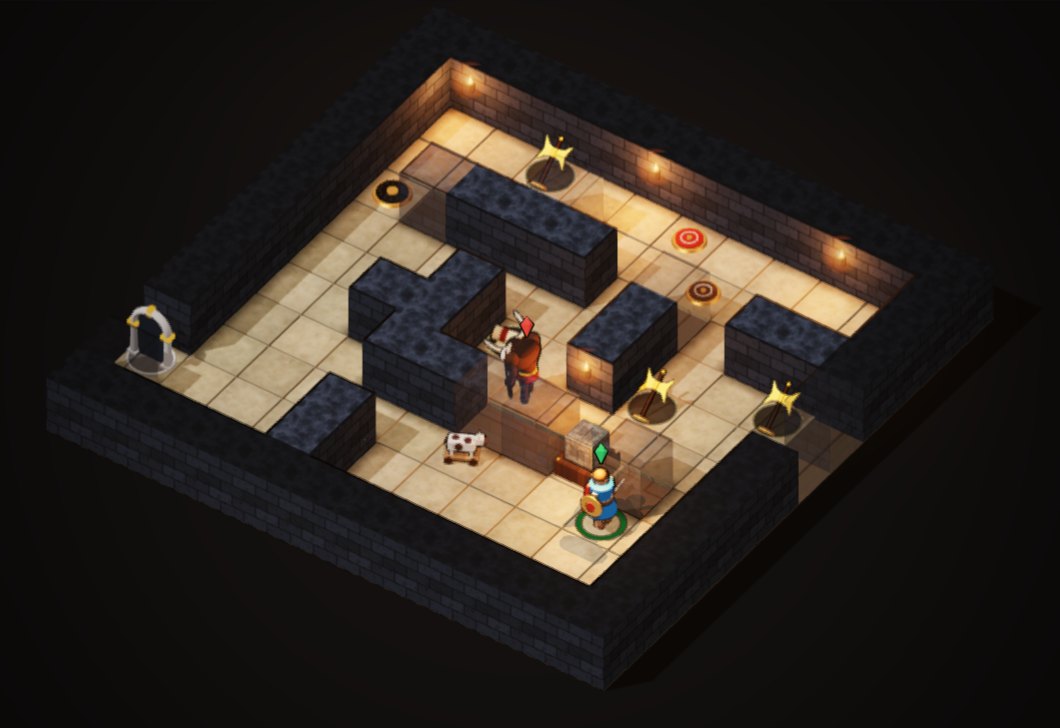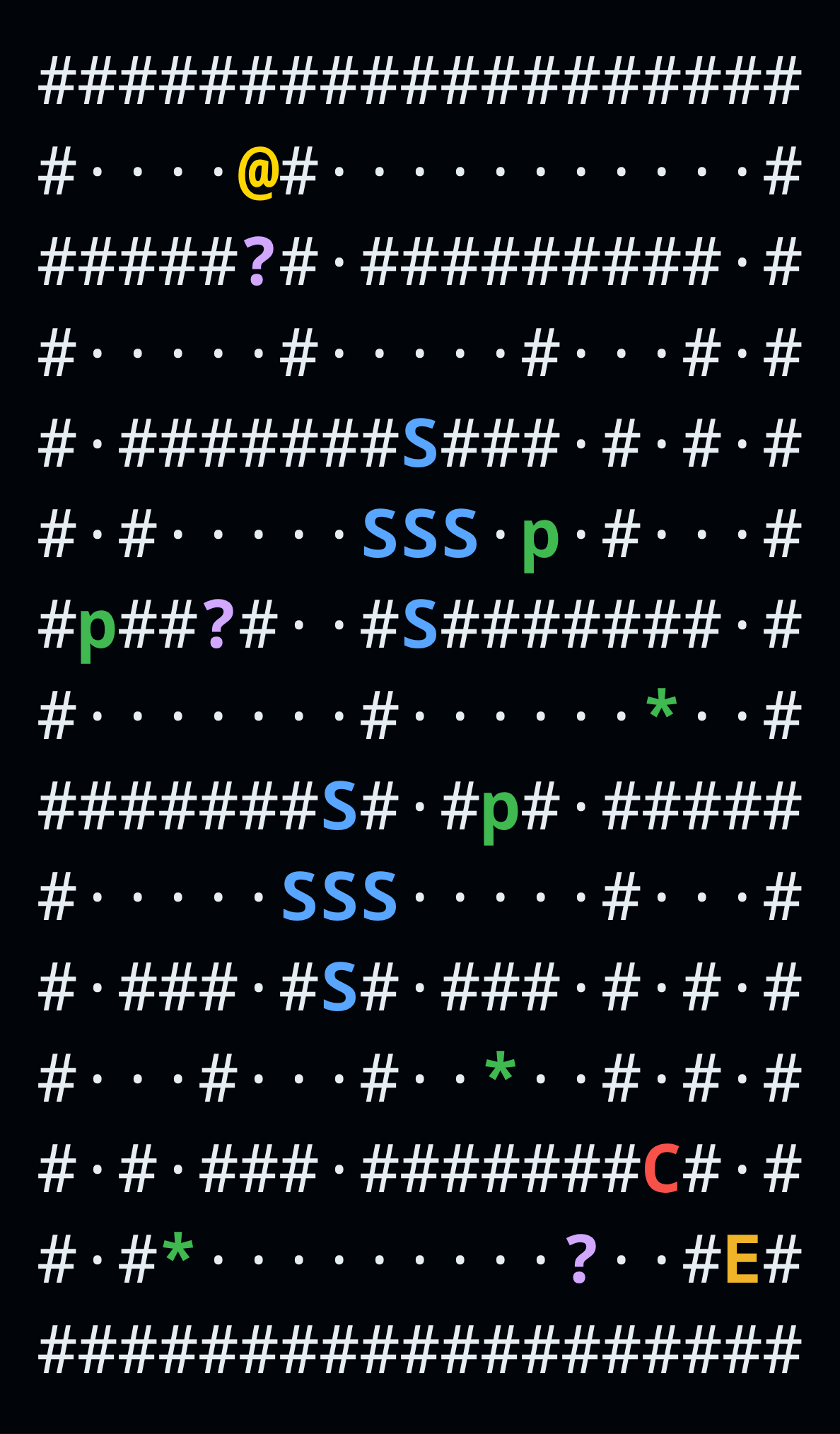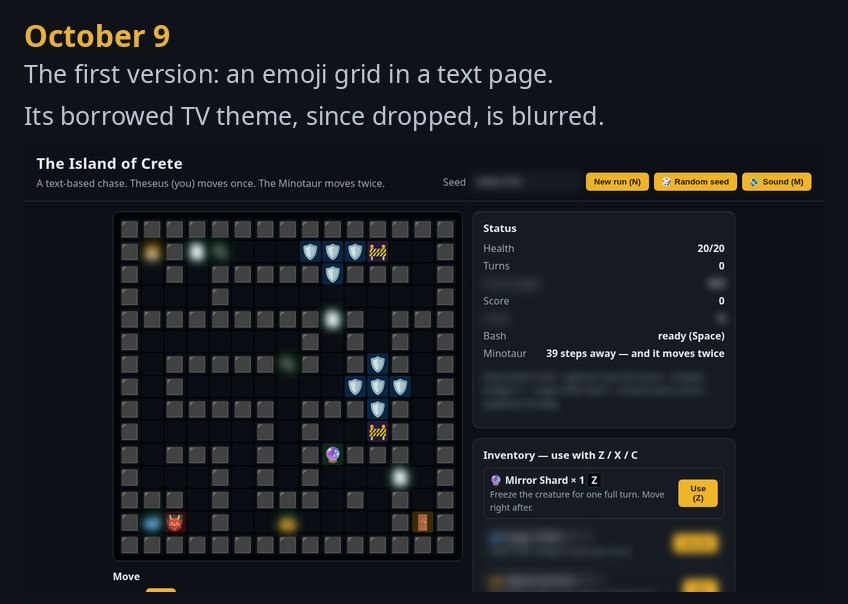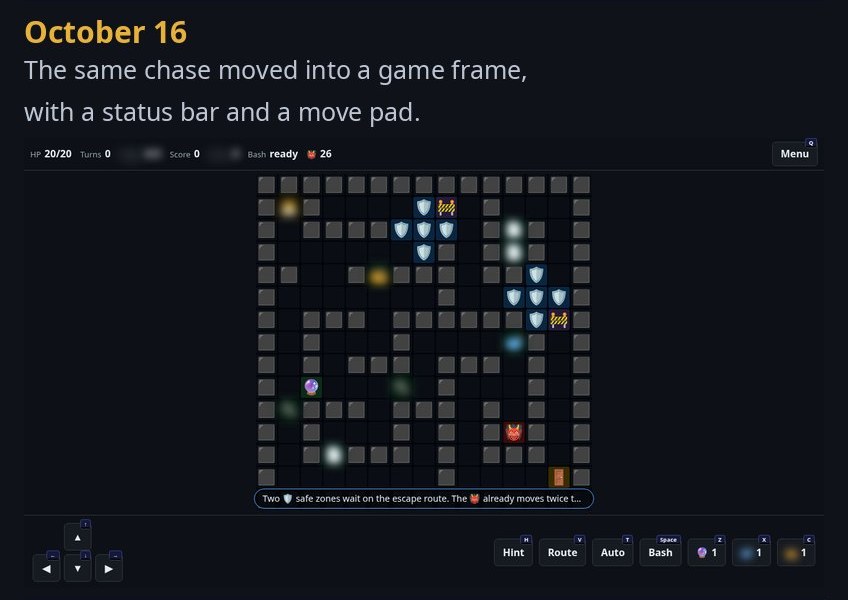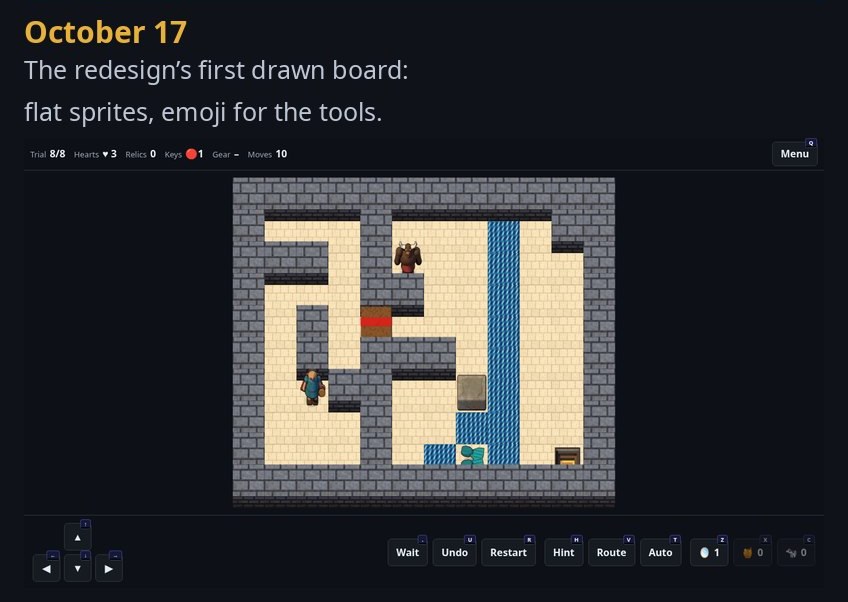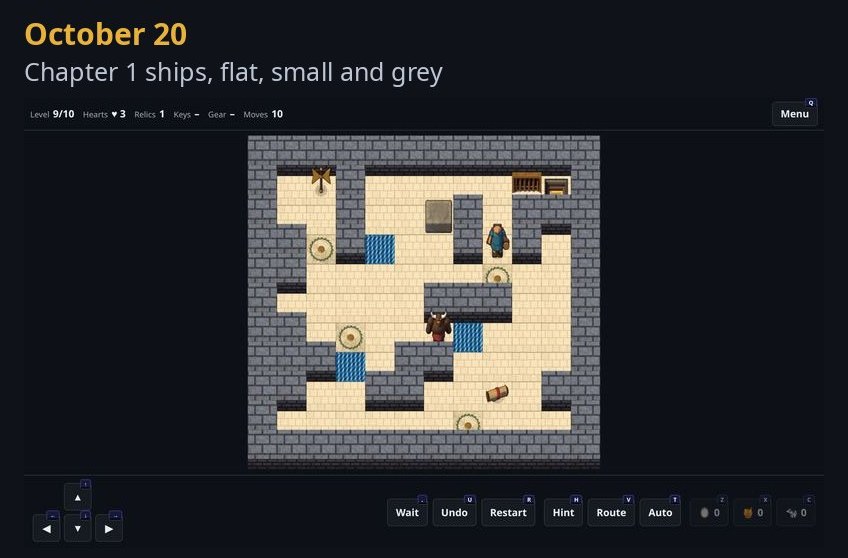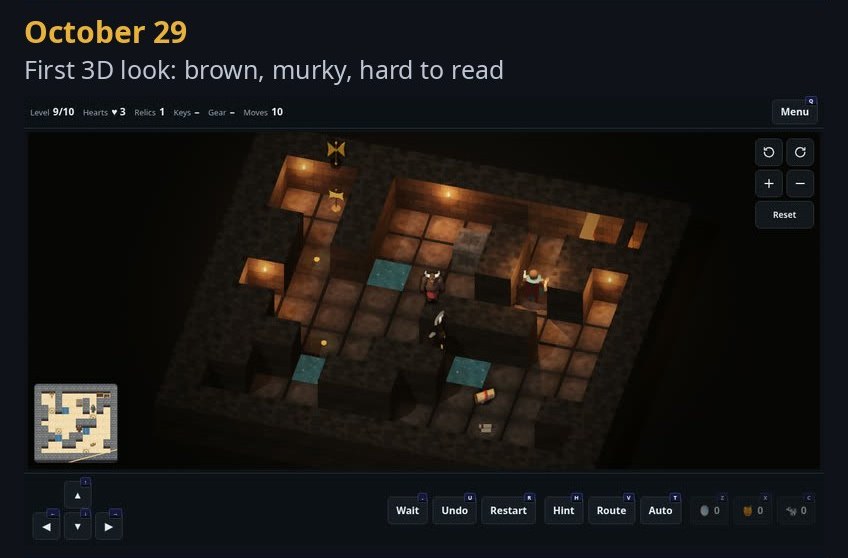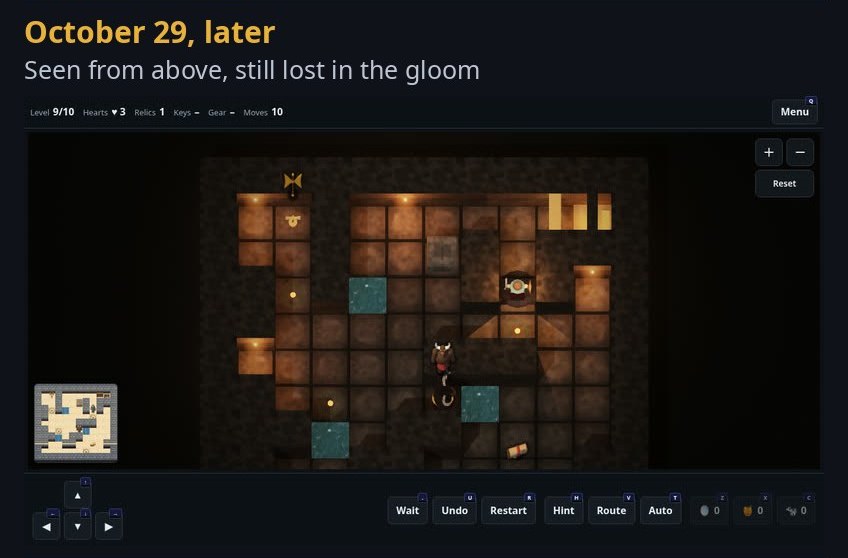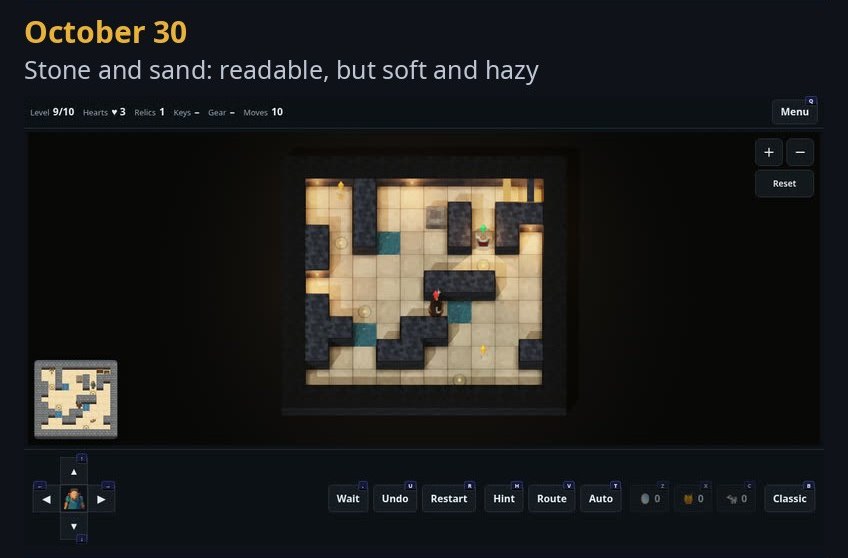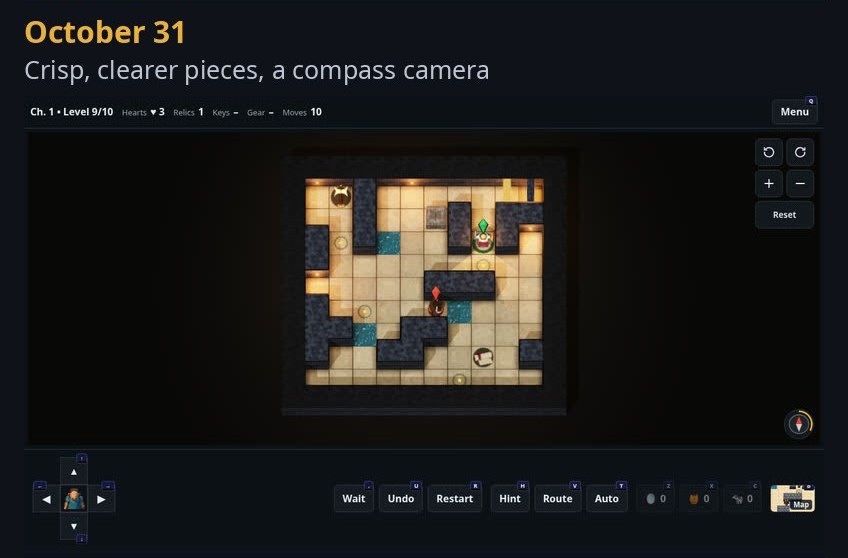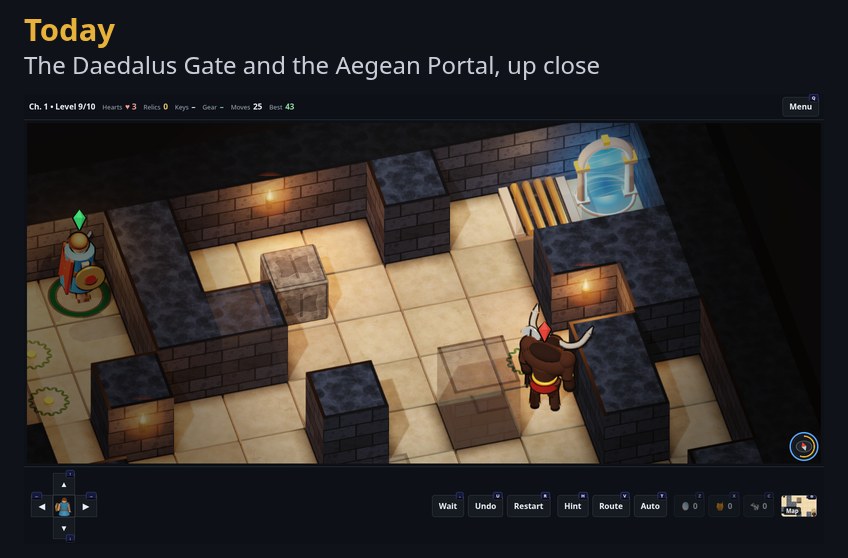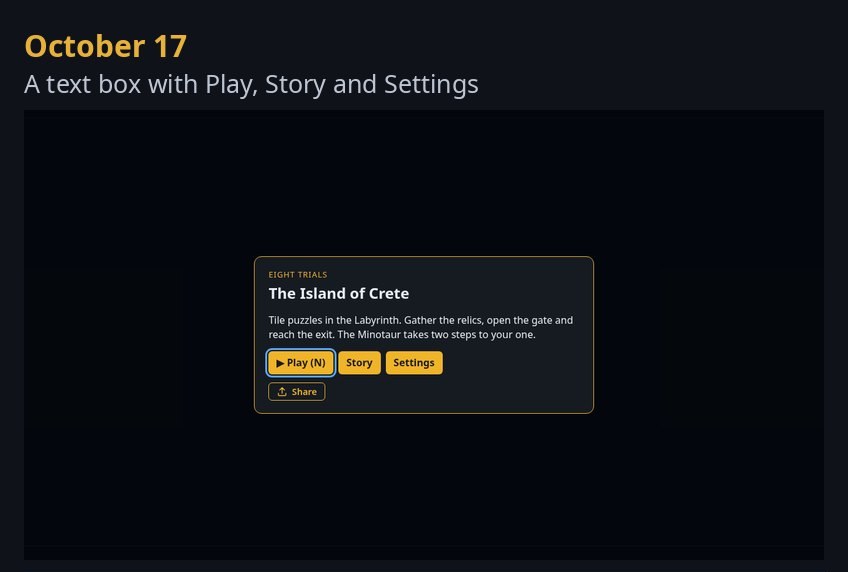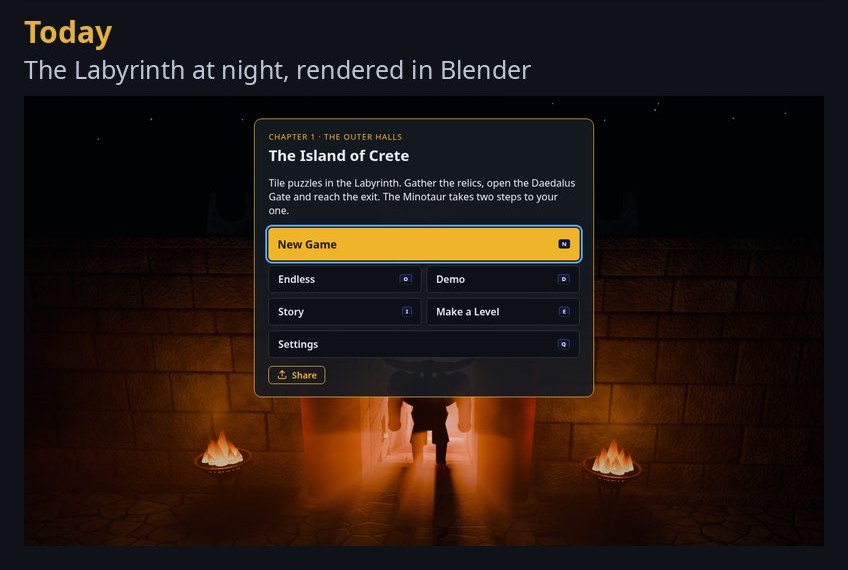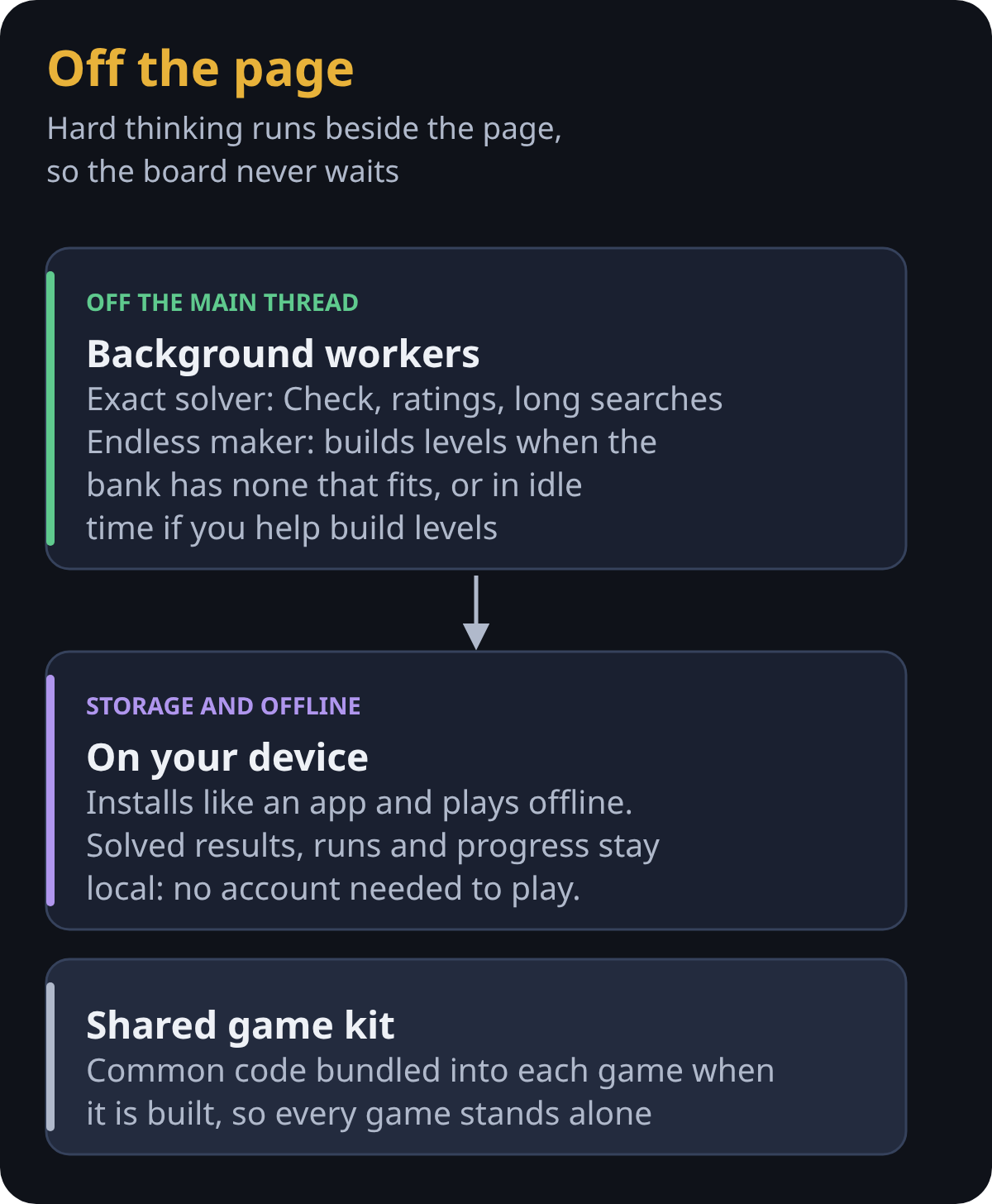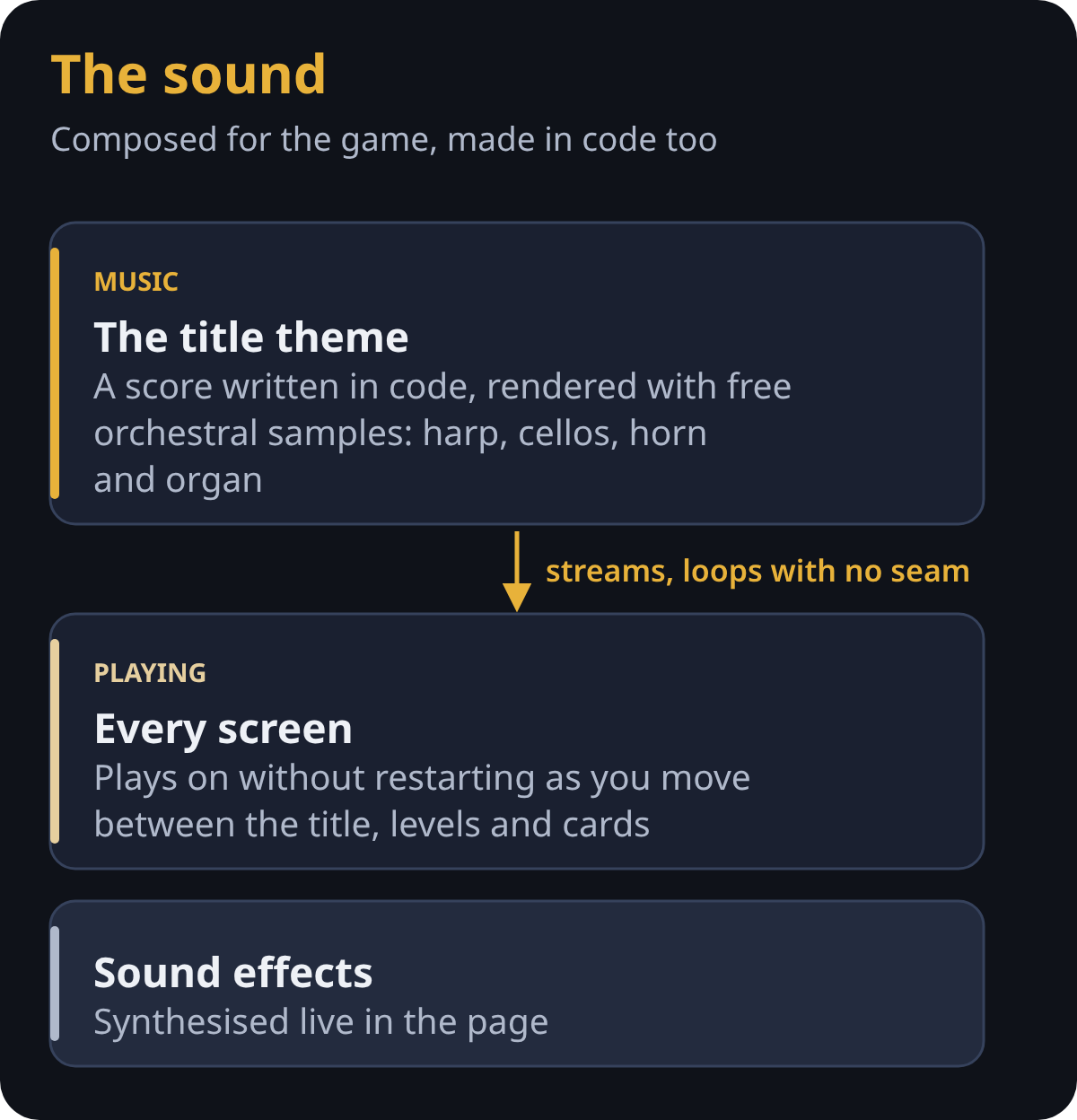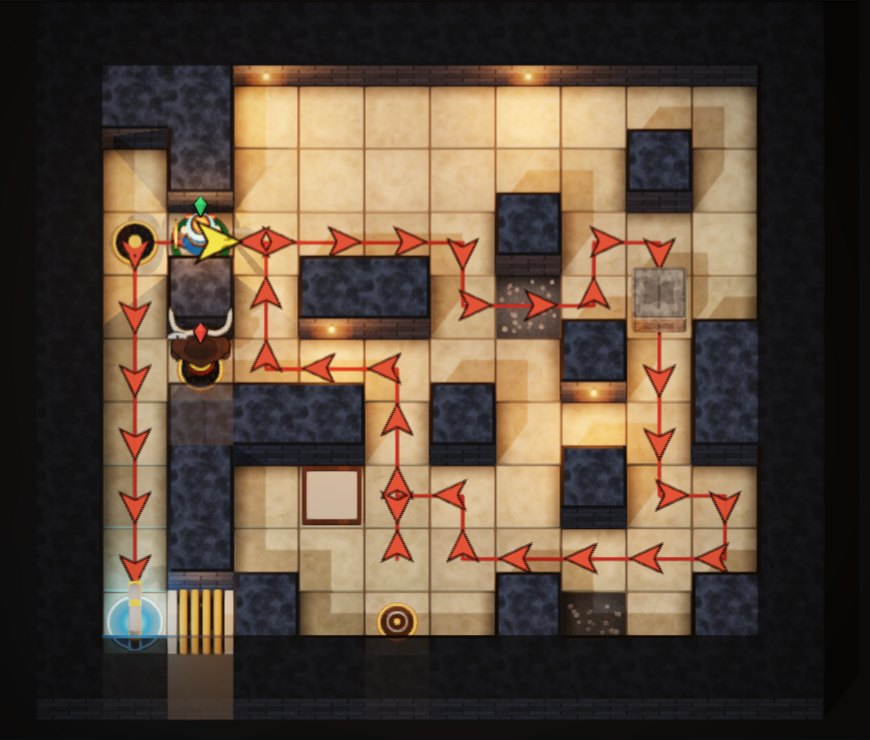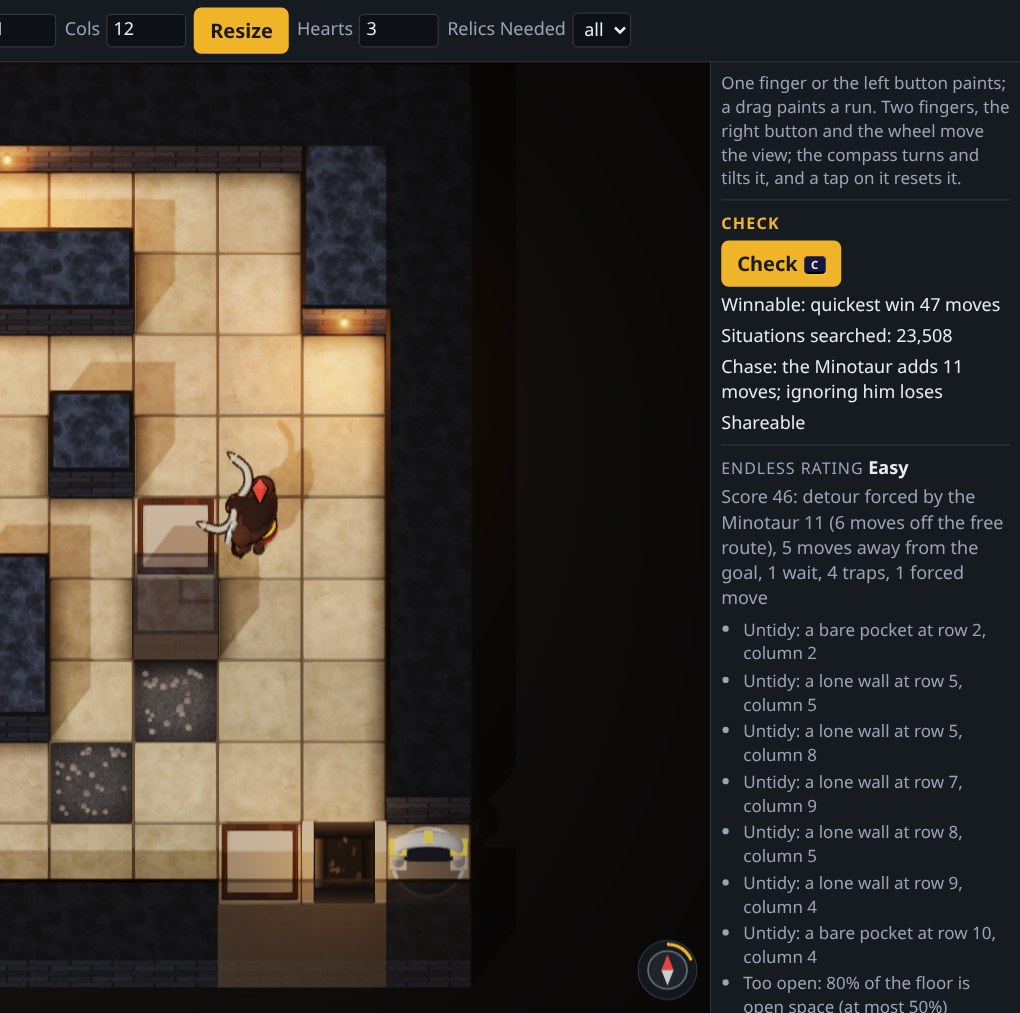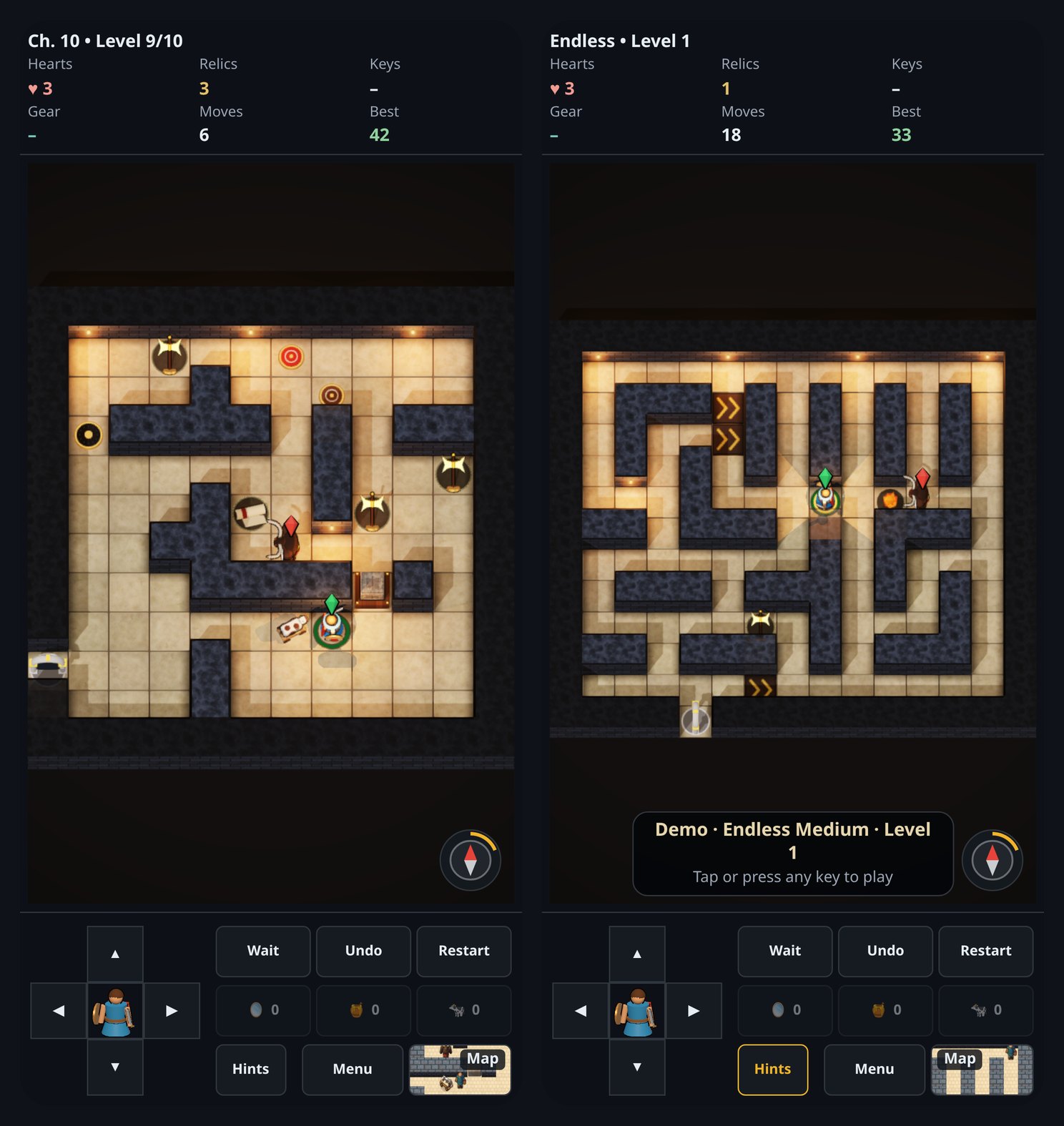
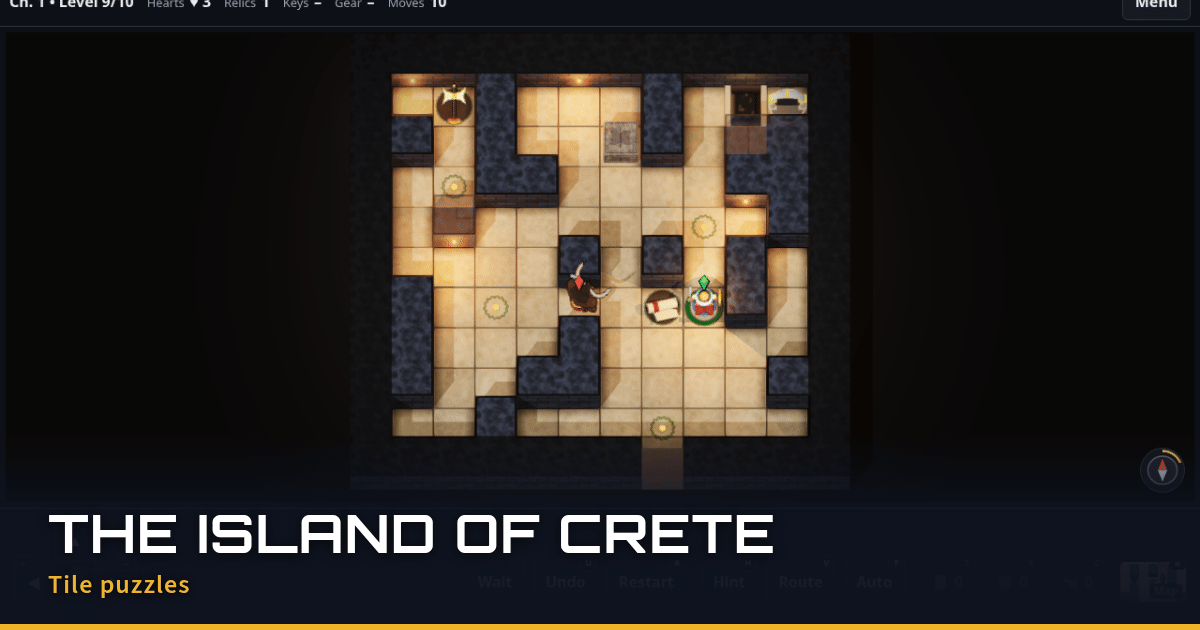
Play the demo right here, or open it full screen for the best experience on a phone.
What it is
The Island of Crete is a tile puzzle game set in the Labyrinth. You are Theseus. Gather every relic, open the Daedalus Gate and reach the exit, while the Minotaur hunts you. He takes two steps for every one of yours, always trying to close the gap across before he tries up or down. That one simple rule is the whole game: you win by reading where he will go and leading him into walls, pits and traps.
The campaign has ten chapters and a hundred levels. Each chapter brings in one new piece of Daedalus’s workshop, teaches it in three short levels, then mixes it with everything before it in seven harder ones. The pieces include gravel the beast can’t cross, walls that rise behind you, false and invisible walls, snares, teleports, rolling bronze balls, Harpies, Talos’s fire, a thief, bombs and a clone machine. There are three tools too: Medusa’s mirror, a wooden cow to lure him, and honey cakes for extra hearts. Story pages hidden in the levels decide which of three endings you get.
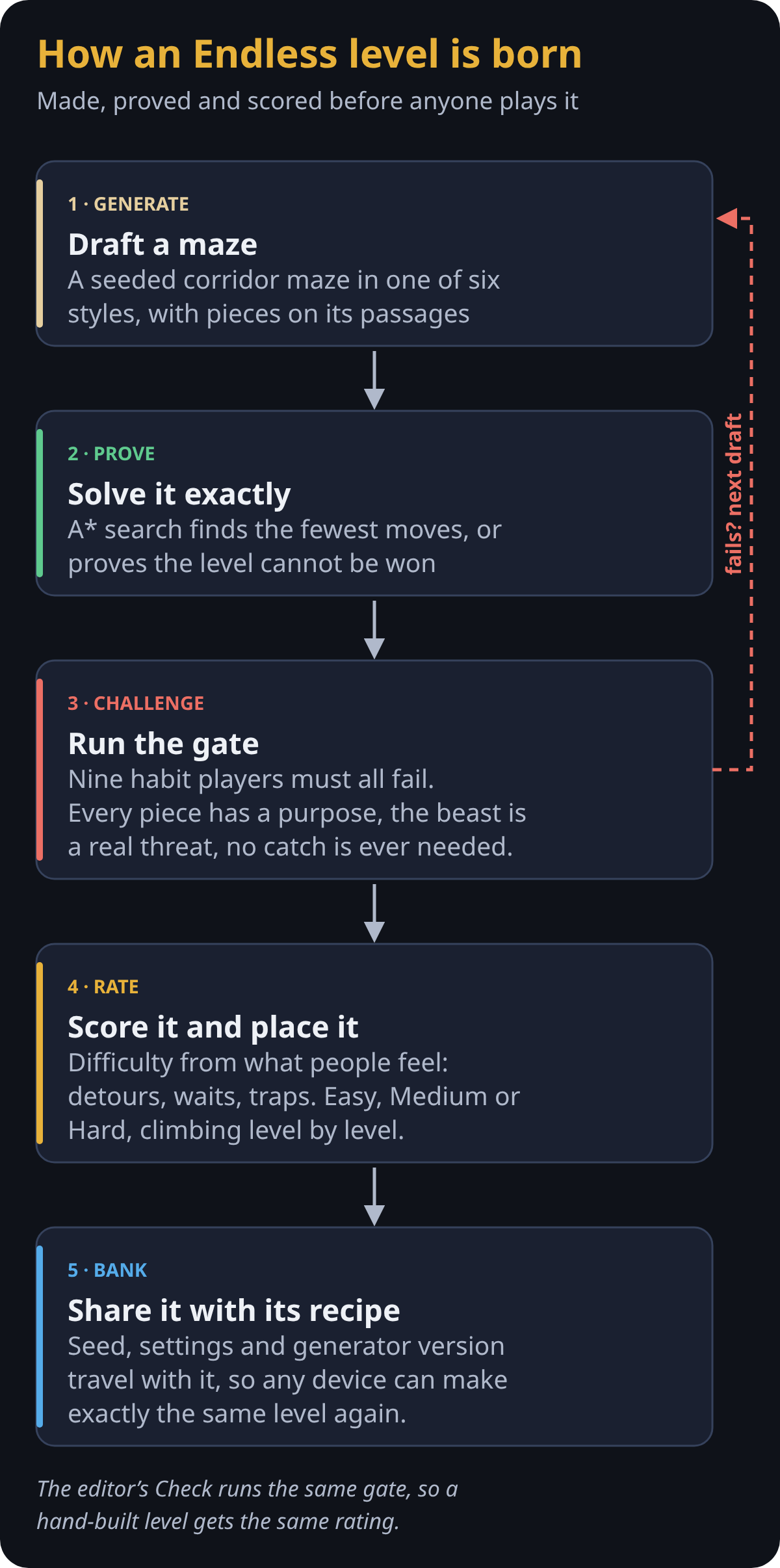
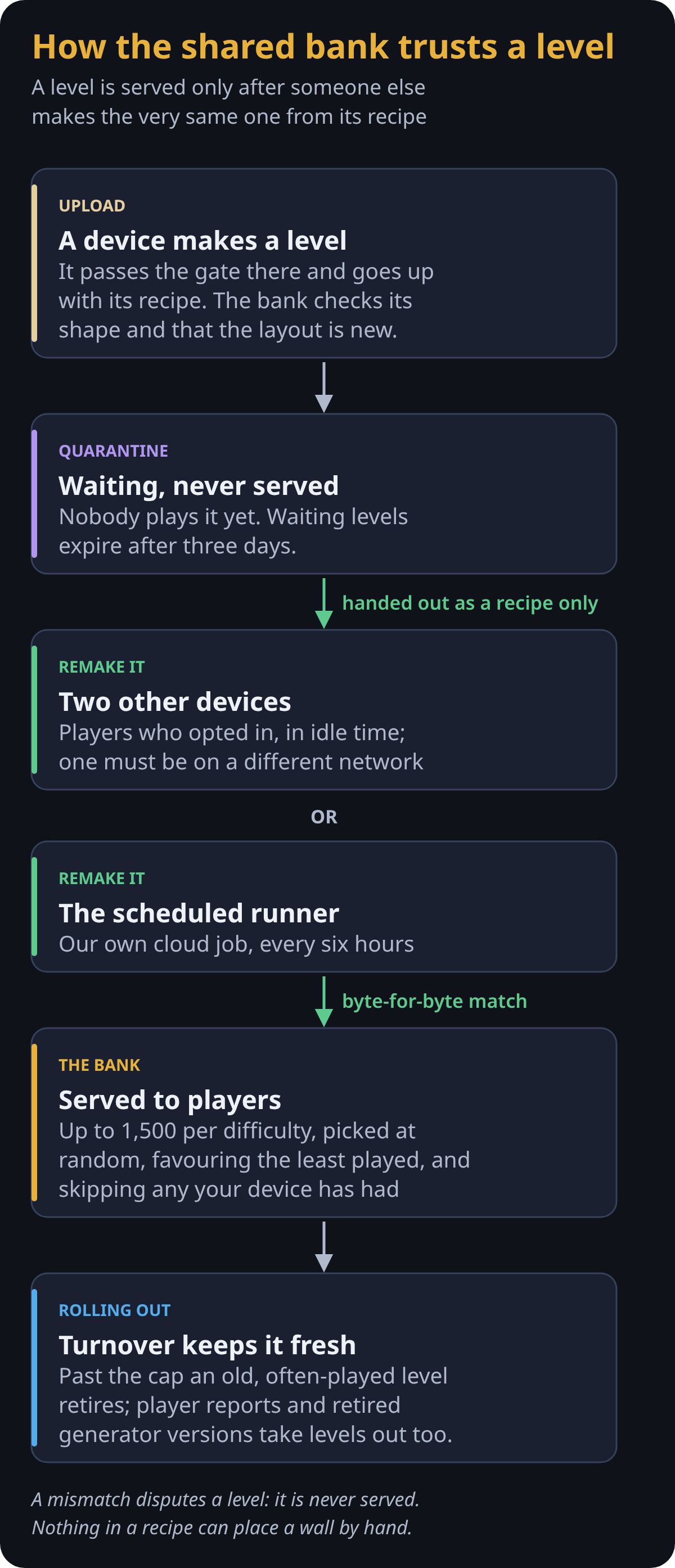
Beyond the campaign there is Endless: new levels made on the fly from a seed, so you can share a seed and a friend plays exactly the same run. There is also a level editor, where you can build your own level, check that it can be won, and share it as a link.
Two looks
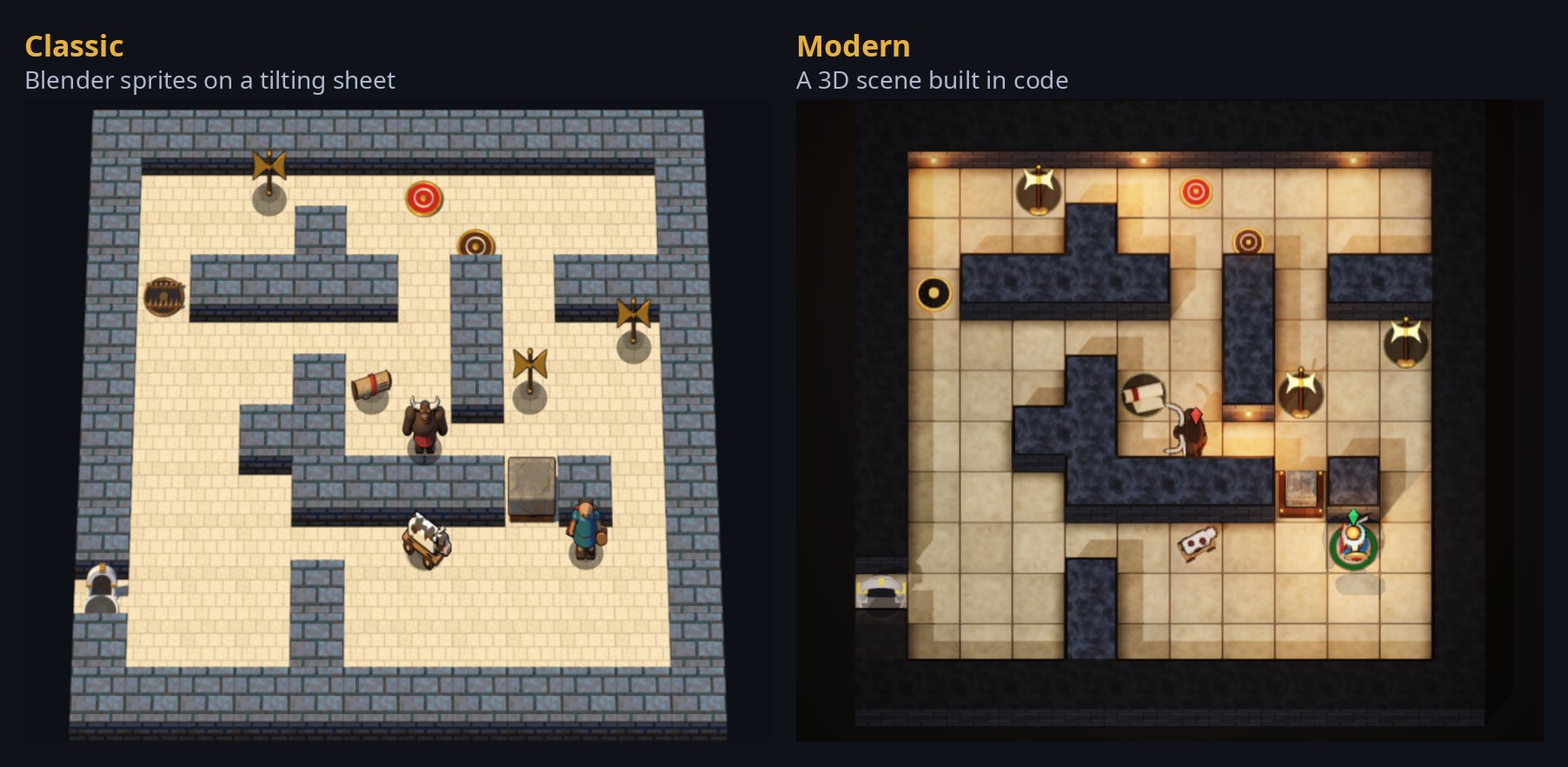
You choose how the Labyrinth looks. Modern is a painted 3D scene with a free camera you turn with a compass. Classic is a flat, hand-rendered board in the spirit of the old tile games. The puzzle is the same in both; only the view changes, and you can switch at any time without losing your place.
How to play
- Move: arrow keys or WASD, or the on-screen pad on a phone. A quick tap is one step; hold it to keep walking.
- Wait: the period key, or Wait. Sometimes standing still is the move.
- Undo and Restart: U and R. Walking back the way you came also takes the moves back.
- Stuck? Ariadne’s thread (H) shows the next step of a perfect solution. Using it marks the try as assisted.
- Best: every level knows its fewest possible moves. Beat a level in exactly that many for a perfect clear.
Next in this series: how the game was built, and the decisions that shaped it along the way.